












































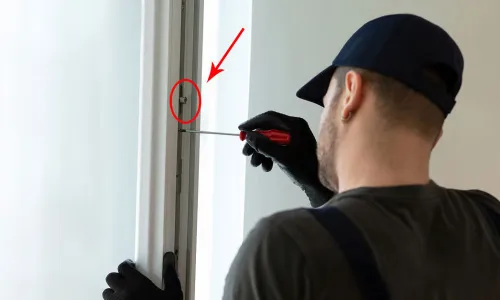

In modern residential architecture, energy efficiency and interior comfort are directly related to the correct use of structural elements. Windows, which allow homes to establish contact with the outside world, are not only a source of daylight and ventilation but also one of the most critical points of thermal insulation. Especially in geographies like Turkey, where four seasons are distinctly experienced, the characteristics of the framing systems used to maintain the difference between outdoor and indoor temperatures gain importance. In this context, the plastic and metal-based framing systems widely preferred in buildings require certain adjustments during seasonal transitions.
These technical features offered by window systems are generally not fully known by users, and windows are used for years with a fixed mechanical arrangement. However, in modern systems with advanced locking mechanisms, there is special hardware that changes the pressure force between the sash and the frame. Optimizing this hardware according to seasonal conditions prevents cold air intake in winter while ensuring long-lasting use by preserving the expansion margin of the material in summer. Broadly speaking, the contributions provided by these small mechanical interventions in terms of both comfort and economy are considered an indispensable part of home maintenance routines. There are certain steps to follow to adjust windows for summer and winter.
Open the Sash and Locate the Locking Mechanism
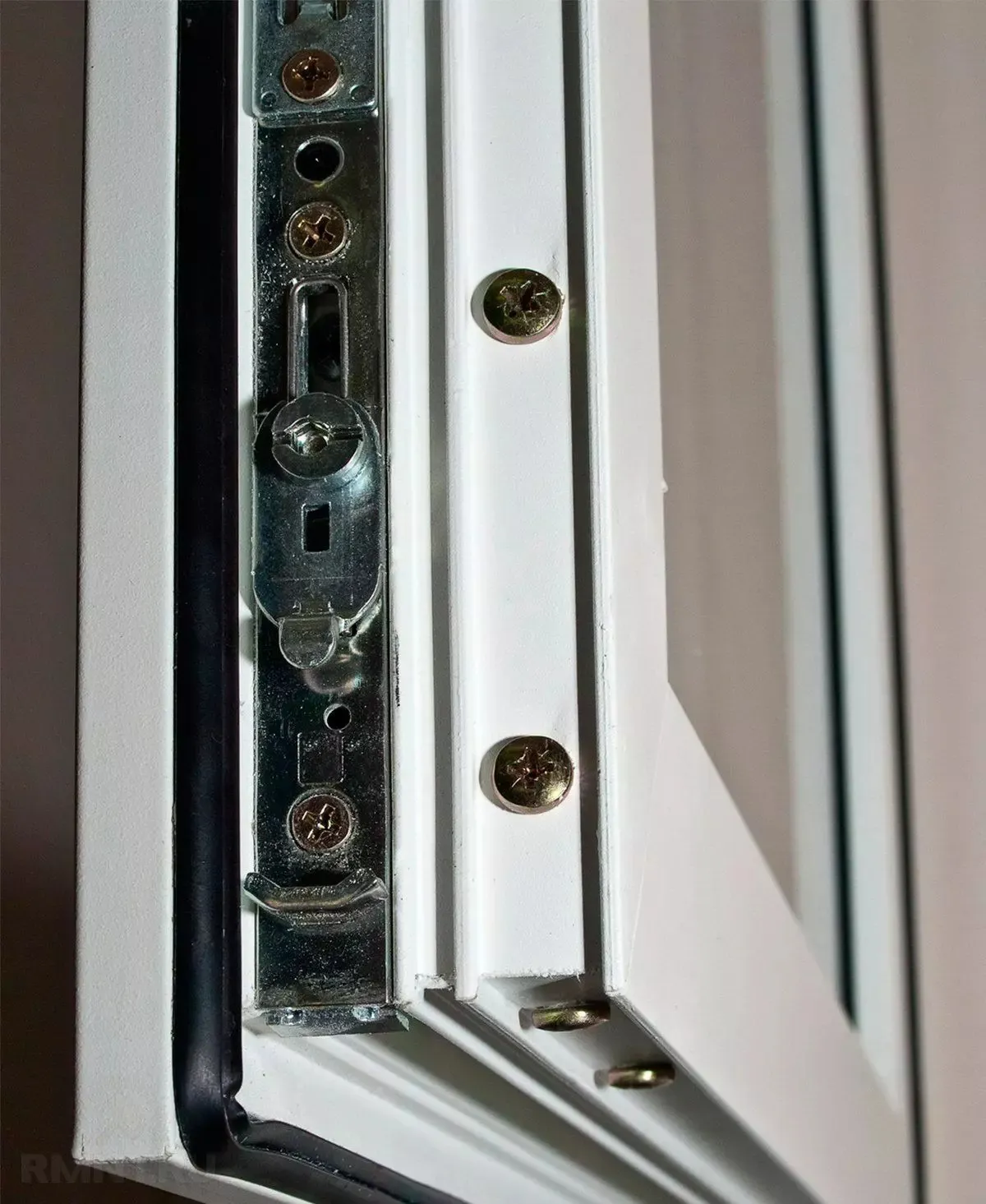
To start the window adjustment process, the relevant window sash must first be fully opened. Once the window is opened, circular or oval metal parts are seen on the side of the sash, specifically on the metal strip that rests on the frame when closed. These parts are technically called eccentric bolts and are the main elements that determine the locking tightness of the window. These parts, usually gray or metallic in color, are distributed at different points along the sash depending on the height of the window.
A window sash usually contains between two and four of these pins. This number may vary according to the size and security level of the window. For the adjustment process to be complete and balanced, users must identify all pins on both the hinge side and the handle side of the sash. Each of these pins enters the corresponding slots of the locking mechanism when the window is closed, securing the sash to the frame. The adjustment process is based on the principle of changing the position of these pins.
Check the Current Setting
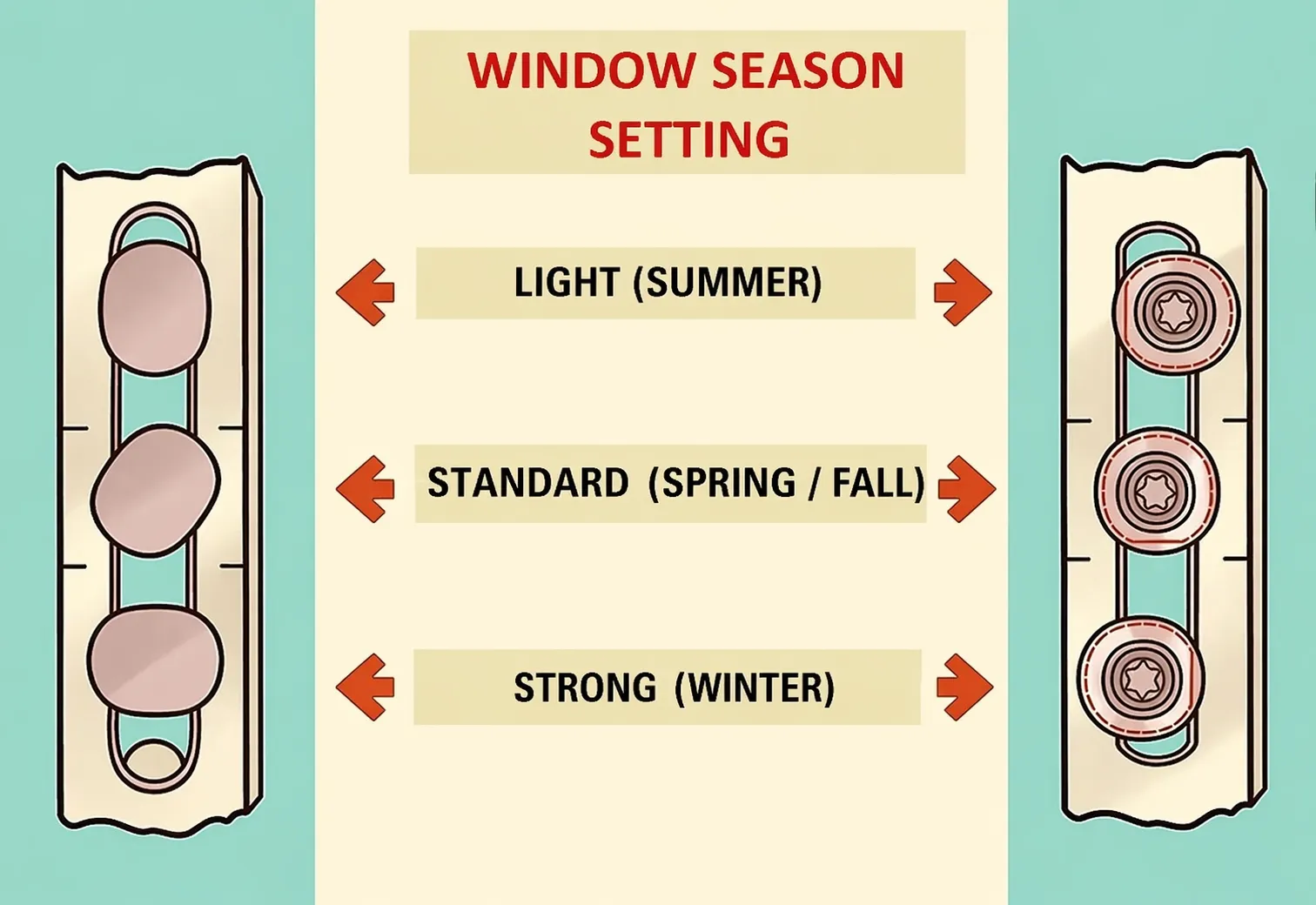
To understand which mode the window is in, the marks on the pins must be carefully examined. Each pin usually has a defining mark, such as a small notch, a dot, or one edge being more oval than the other. This mark acts as a compass indicating the current pressure level of the pin. If this mark is facing towards the outside of the window, i.e., towards the street, it means the sash applies less pressure to the frame, which is defined as "Summer Mode."
If the mark on the pin is facing towards the inside of the house, i.e., towards the room, this indicates "Winter Mode." In winter mode, the pin is positioned closer to its counterpart on the frame and pulls the sash toward the frame with much stronger force when closed. If the mark is positioned directly upward or in the middle, this is the standard setting. The standard setting is usually applied during the initial installation of the windows and is expected to provide average performance throughout all four seasons. However, for maximum efficiency, it is recommended to change this position during seasonal transitions.
Prepare the Necessary Tool
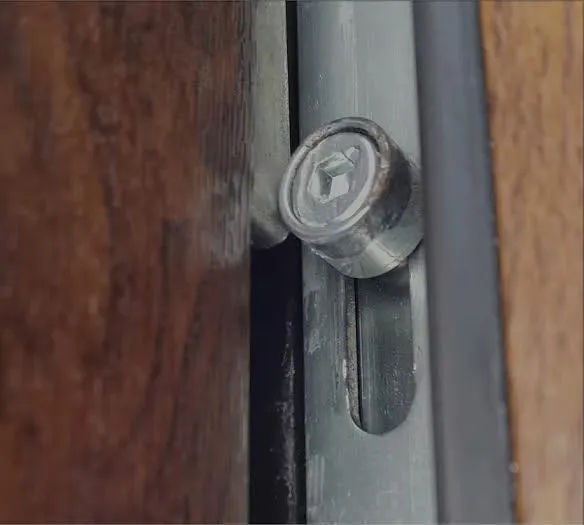
Complex or industrial machinery is not required to change window settings. Most modern plastic window systems are designed to be compatible with standard-sized hand tools. The most commonly used tool for this process is a number 4 Allen key, which is also frequently encountered in furniture assembly. The hexagonal structure of this key fits perfectly into the slot at the center of the pin, allowing the part to be turned without damage.
In some older model windows or designs from different manufacturers, there may not be an Allen slot on the pin. In such cases, using flat pliers or needle-nose pliers that can grip the pin from the outside will be sufficient. It is important to ensure that the tool used grips the pin firmly and does not scratch the metal surface of the pin during the turning process, to prevent future rusting or jamming of the mechanism. Once the tool preparation is complete, it is recommended to keep the force applied to each pin at the same level.
Repeat the Process for All Pins
One of the most common mistakes users make when adjusting windows is turning only a single, easily accessible pin and considering the process complete. However, for healthy sealing and proper sash balance, all adjustment points on the window sash must be in the same mode. Setting only the top pin to winter mode can cause cold air to still enter from the bottom, and may also lead to the sash warping over time or the handle mechanism being strained.
Users should examine the sash from top to bottom and turn all eccentric bolts individually in the same direction. In some windows, there may also be an adjustment pin in the hidden section on the hinge side. Ensuring these points are not skipped allows the window to be pulled toward the frame equally from both sides (both the handle and hinge sides). A balanced pressure distribution delays the wear of mechanical parts by sharing the load of the locking system and contributes to the window operating more quietly.
Perform a Sealing Test
After the adjustment process is finished, a practical sealing test should be applied to confirm the accuracy of the procedure. No technological device is needed for this test; a standard piece of paper is sufficient for this task. An A4 sheet of paper or a bill is placed between the sash and the frame while the window is open, and the window handle is closed to the fully locked position. Then, an attempt is made to pull the paper outward.
If the window has been successfully set to winter mode, it will be quite difficult to pull the paper out, or the paper will reach the point of tearing. This indicates that the gaskets are gripping the paper tightly and, therefore, air cannot pass through either. If the paper slides out easily without encountering any resistance, the pin adjustment is insufficient or has been turned in the wrong direction. In this case, the position of the pin should be checked and tightened further if necessary. In summer mode, it is normal for the paper to move more easily, as the goal in this mode is not absolute sealing but rather relieving the mechanism.
Advantages of Making Seasonal Window Adjustments
Making seasonal adjustments to window systems provides versatile benefits for users. These advantages can be generally listed as follows:
- Thermal Insulation and Energy Saving: Windows set to winter mode cut air leaks by minimizing the gap between the frame and the sash. This helps heating systems maintain the house at the desired temperature while consuming less energy, thereby reducing fuel costs.
- Increased Sound Insulation: The tighter fit of the sashes against the frame significantly prevents traffic and noise pollution from the outside environment from leaking into the interior.
- Prevention of Dust and Air Pollution: A tight closing mechanism prevents particles such as dust, pollen, and smoke from entering through window gaps, thus protecting indoor air quality.
- Extension of Material Life: Reducing the pressure during summer months prevents the excessive crushing of PVC and rubber gaskets that expand due to hot weather. In this way, window seals wear out later, and replacement costs are reduced.
- Moisture and Humidity Control: A correctly adjusted window prevents outside precipitation and moisture from leaking in, minimizing the risk of mold and dampness that can occur on walls.
Seasonal window adjustments performed in homes not only provide energy savings but also create ideal climatic conditions in every part of the living space. Especially in areas where heat balance and air quality are critical, such as a kids' room, a correctly implemented winter setting prevents the little ones from being affected by cold air drafts. Similarly, in teenager room sections where studying and resting activities are intense, a more productive environment is created by maintaining both sound insulation and ideal temperature. These small but effective touches applied to windows make the comfort of all rooms—carefully prepared from furniture to decoration—permanent. These procedures, which are recommended to become a routine check during seasonal transitions, are considered one of the fundamental keys to a healthy and peaceful home life.
You Might Be Interested In→ How to Do Winter Cleaning?