














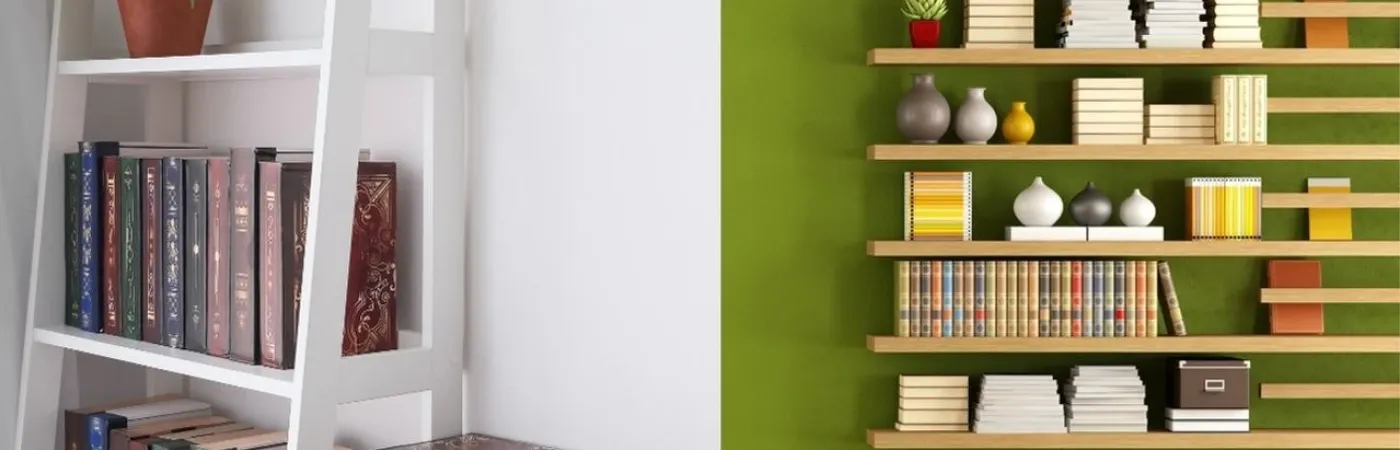
Books are precious treasures that make life deeper and more meaningful, nourish the mind, and soothe the soul. Each book is a door to a different world, and the reading experience is an element that can transform the atmosphere of its surroundings. Giving these valuable books the place they deserve in our homes is not just about storing them; it also integrates them into our living spaces. Bookshelf construction becomes relevant when standard furniture does not meet your needs or fit your space. A bookshelf designed and crafted by your own hands can turn into a unique design that reflects the character of your home and personalizes your living space.
Nowadays, designing and creating your own furniture has become part of the "Maker" culture. Instead of buying ready-made products, bringing your own project to life allows you to control both the spatial limits and your aesthetic preferences. Especially for irregular wall recesses, attic slopes, or areas with non-standard dimensions, custom design can be an essential step that necessitates building a personalized bookshelf.
Material Selection for Bookshelf Construction
Material selection is one of the most critical stages of bookshelf construction. The right material determines the durability, aesthetics, and lifespan of your project. Once you have accurately measured your space, you can consider the following material options:
Solid Wood Panels: Ideal for a natural look and long-lasting durability. Solid wood stands out with its strength and elegance.
Planed Timber: An economical alternative that provides a natural texture and appearance.
MDF Laminate: If you are looking for a more modern appearance, you can achieve a stylish design by applying a laminate over MDF.
Raw MDF: Offers an economical option that can be personalized with paint, ideal for those who want custom colors in their design.
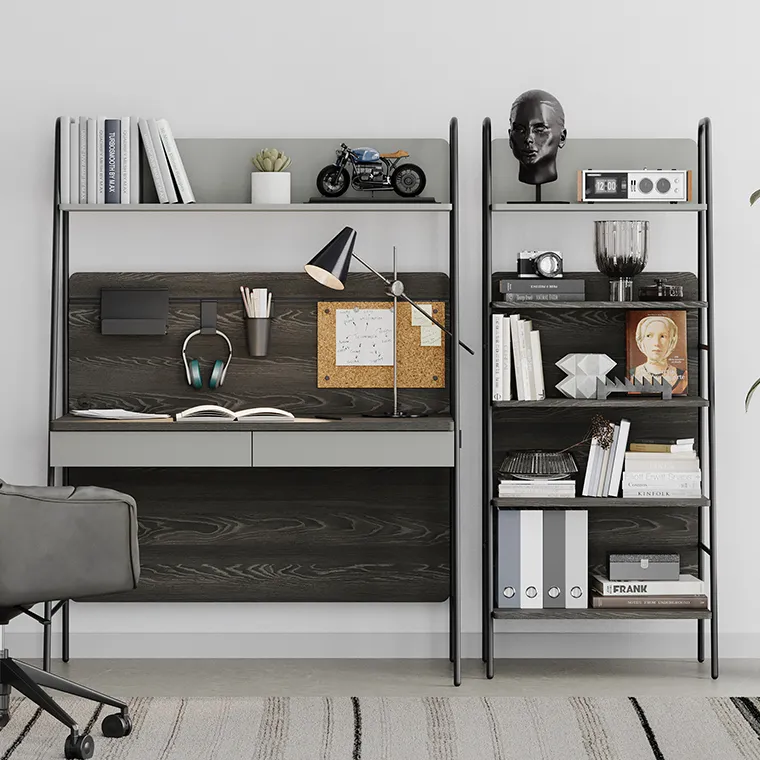
Metal Details: For those who want a more industrial look, metal details can be used in harmony with wood, adding a modern touch.
Glass Shelves: Glass shelves can be chosen for a light and elegant aesthetic, but their durability should be taken into account.
Tips for Bookshelf Construction
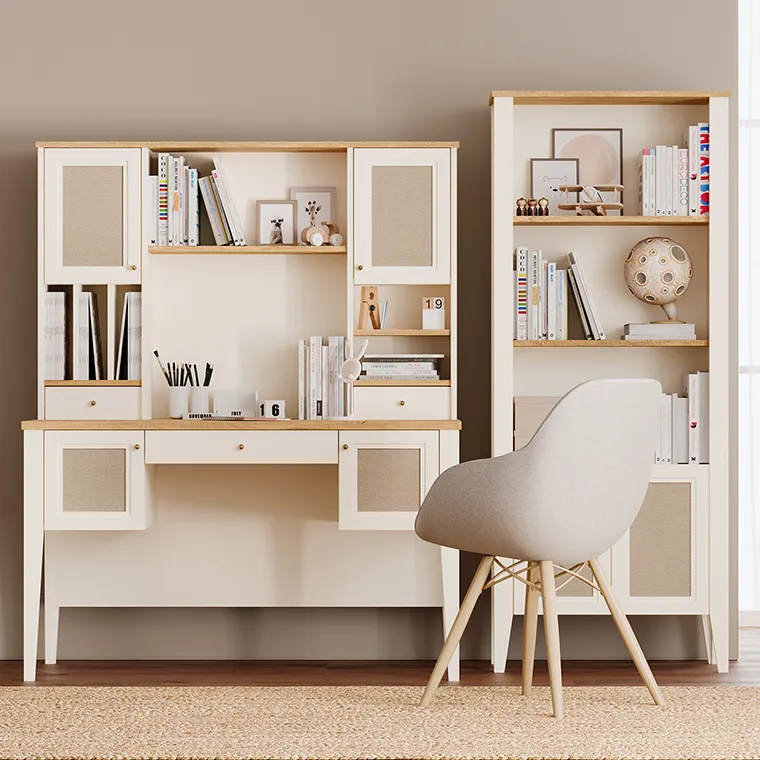
After deciding on your design and obtaining your materials, it’s time to get started. The first step is to create a cutting list based on the design you selected from the DIY bookshelf models that inspired you. If you don’t have a professional cutting machine at home, you can provide your measurements to cutting services at hardware stores to get perfectly precise pieces. This will make the assembly process much easier. You can follow these steps to build your bookshelf:
Determine the dimensions of the bookshelf.
Choose a style that matches the room's décor.
Calculate the shelf widths and heights.
Decide on the types of materials to use.
Select wood or metal details for a modern look.
Cut the shelves according to the measurements.
Prepare fasteners, screws, and support elements.
Assemble the frame first.
Then attach the shelves securely.
Check the load distribution.
Finally, apply surface protection treatments.
Wall Shelves and Modern Minimalist Solutions
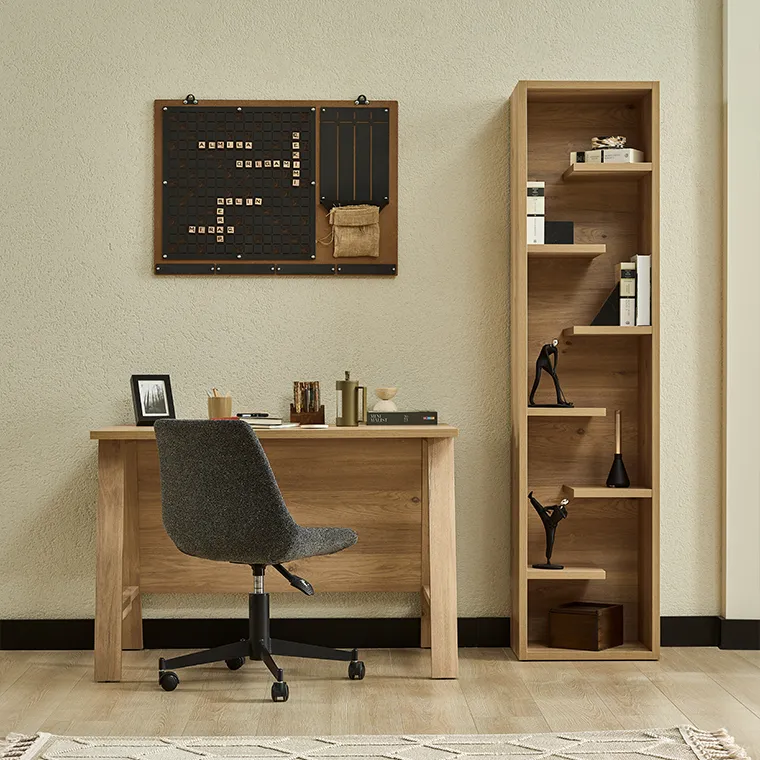
Sometimes you may not need a massive bookshelf unit, or your space may not allow it. In such cases, wall-mounted standalone shelves are a great alternative. Especially if you are a beginner in wooden bookshelf construction, floating shelves with hidden brackets or solid wood attached with decorative brackets will serve your purpose. This method allows you to gain vertical storage space without occupying floor area.
Not everyone has a fully equipped workshop or advanced hand tools at home. Fortunately, there are methods that do not require complex carpentry. For example, stacking ready-made wooden crates vertically and side by side to create a modular system is one of the most popular ways to build a bookshelf at home. You can secure these crates together with screws or strong adhesives and paint them in any color to match your room's décor.
Bookshelf Construction from Waste Materials
With the rise of environmental awareness, creating designs from waste materials has become popular. Reusing old and unused materials to make stylish and unique bookshelves offers an eco-friendly approach and adds one-of-a-kind pieces to your home. Here are some creative examples:
- Old Wooden Ladder: Add planks to the steps of a ladder to create a chic bookshelf.
- Cable Reels: Stack them to create a rotating bookshelf.
- Wooden Pallets: Create a simple shelving system.
- Guitar Case: An unused guitar case can be turned into a stylish bookshelf by adding shelves inside.
These projects present style and aesthetics in a simple yet creative way, while also producing unique pieces that carry traces of the past.
Is It Possible to Add Doors to a Bookshelf?
After constructing the main frame of your bookshelf, you can make it more functional by adding extra features. You may want to prevent dust from settling on your books or hide clutter on the lower shelves. This is where adding doors to the bookshelf comes into play. Although special drill bits may be needed to create hinge slots, properly cut MDF or glass doors fitted into a frame can completely transform the look of your furniture, giving it a more professional appearance.
How to Organize a Bookshelf?
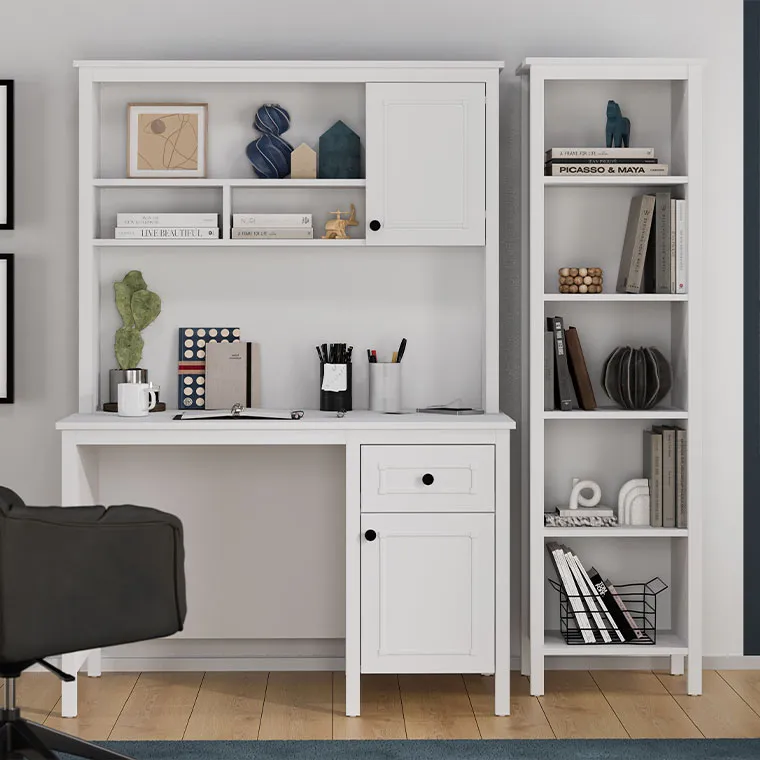
Once your bookshelf is complete, the most enjoyable part—arranging it—begins. Instead of placing books randomly on the shelves, establishing a certain system ensures visual harmony. A bookend can prevent books from toppling over while serving as a decorative object. Bookends made of metal, wood, or natural stone add character to your shelves. You can also breathe life into the space by placing small plants, picture frames, figurines, or travel souvenirs between the books.
Arranging some books horizontally in stacks, instead of all vertically, can break monotony. Organizing books by color, alphabetically by author, or by genre entirely depends on your personal habits. The important thing is to create a system that allows you to easily find the book you want without straining your eyes.
How to Choose Different Bookshelf Models?
Conducting thorough research before starting your project expands your vision. You can find countless bookshelf design ideas online, in decor magazines, or on social media platforms. From industrial metal pipe designs to classic carved wood, from asymmetrical modern cuts to built-in cabinets covering an entire wall, there are examples for every taste. Choosing the one that best suits your skills and the overall style of your home, and then adding your personal touch, is key to success.
By following DIY bookshelf techniques, you can create a functional and aesthetically pleasing reading corner in your home. However, if you prefer a stylish and functional bookshelf, you can explore Almila bookshelf models for options!
Related→ What Should Be the Bookshelf Dimensions for a Teen Room?