Furniture Guide
What Is a Convertible Crib and How Does It Turn into a Bed?
Convertible cribs are functional pieces of furniture that can be used from infancy through childhood. Click to learn about their benefits and more!
Convertible cribs are one of the practical solutions developed by modern parents with their babies’ comfort and safety in mind. These special cribs adapt to babies as they grow, making them suitable for long-term use. At Almila, we manufacture our Mia and Monte convertible crib models using the highest-quality materials, so you can use them from infancy through childhood. These models stand out for both their attractive appearance and functionality.
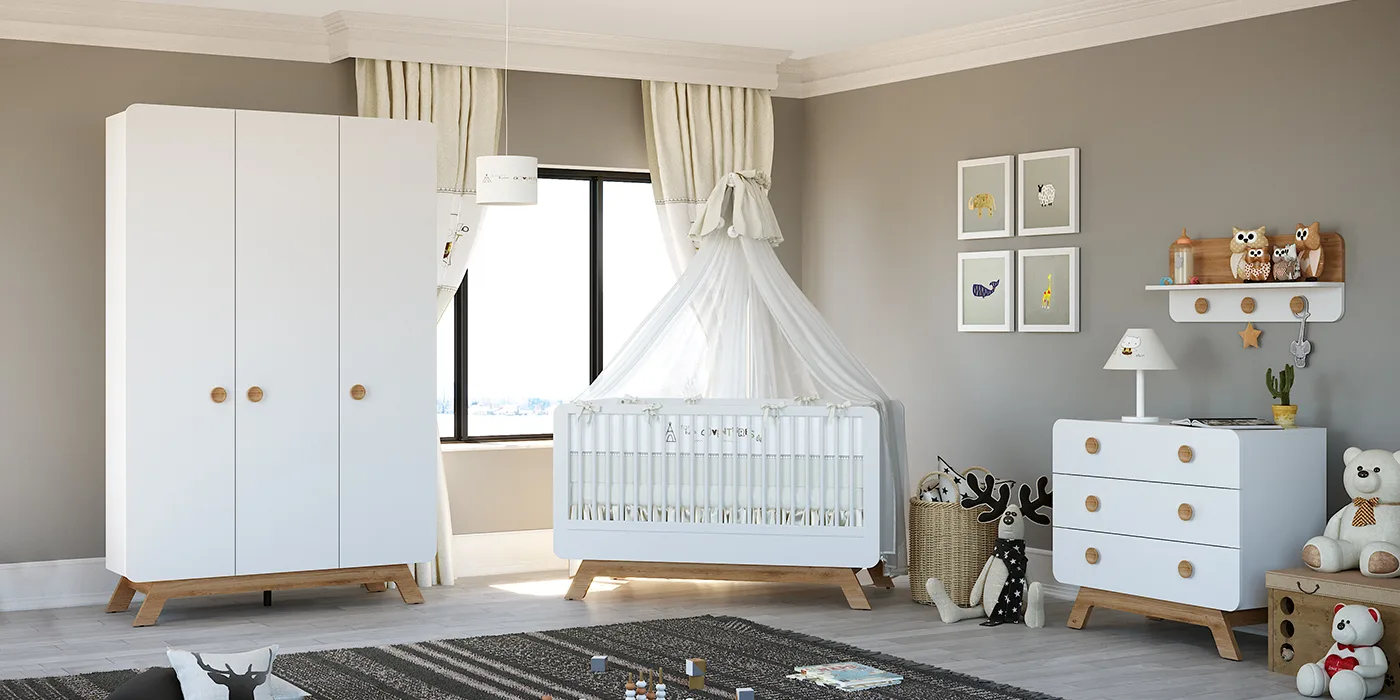
How Does a Convertible Crib Grow and Turn into a Bed?
Convertible cribs offer an economical and functional solution thanks to features that can be adjusted to suit a baby’s age and stage of development. There are a few important points to keep in mind when converting a crib as your baby grows. These are essential both for ensuring safety and extending the life of the crib.
- Mattress Platform Height: The most distinctive feature of convertible cribs is their adjustable mattress platform height. When your baby is first born, the mattress platform is at its highest setting. This makes it easier for parents to lift their baby in and out of the crib.
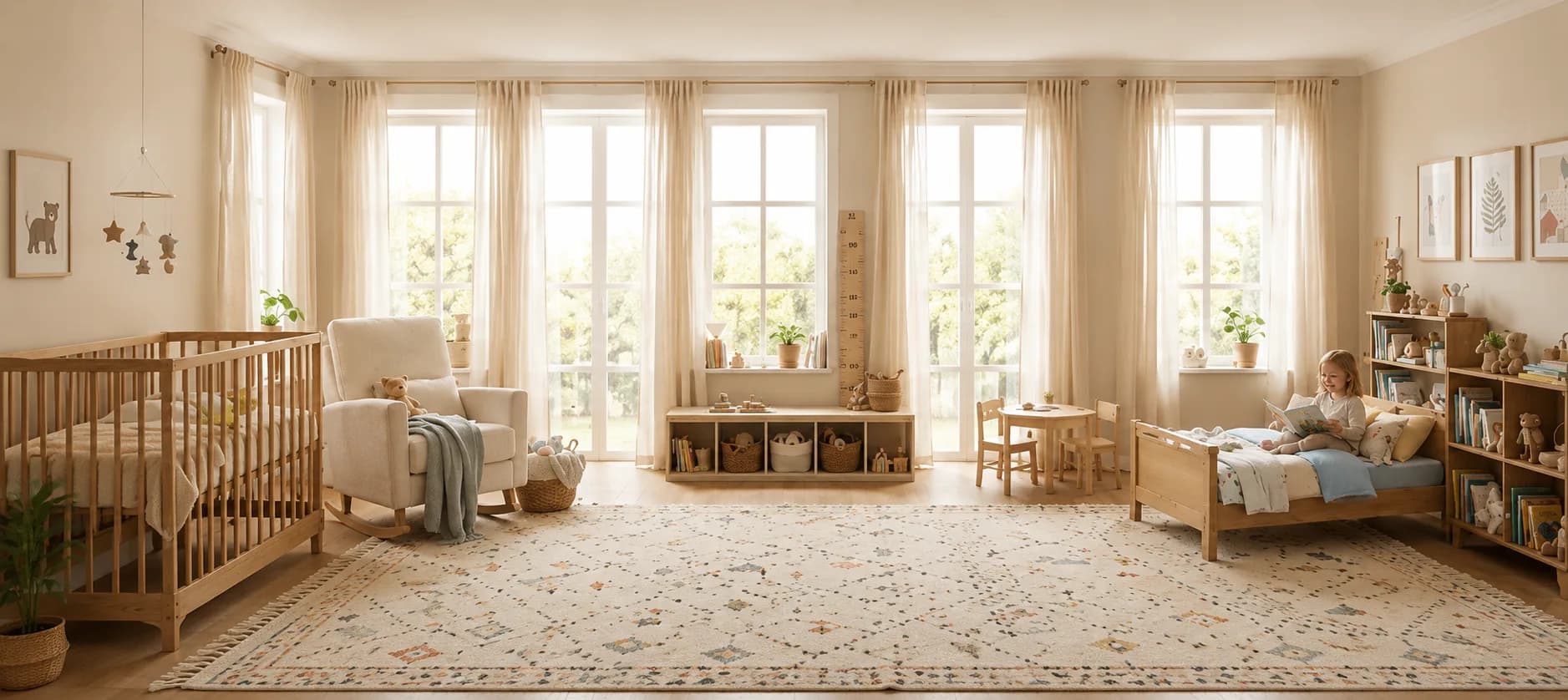
- Lowering the Platform: As your baby becomes more mobile, lower the mattress platform. There are usually three height settings, allowing your baby to continue sleeping safely as they grow.
- Removing the Side Rails: When your baby reaches 2-3 years of age and becomes more independent, you can remove the side rails to convert the crib into a child’s bed. This encourages your child to sleep independently while providing a safe sleeping space.
- Extension Features: Our Almila convertible crib models can be extended using the storage section beneath the bed to provide a larger sleeping area. This feature meets your child’s need for more space as they grow.
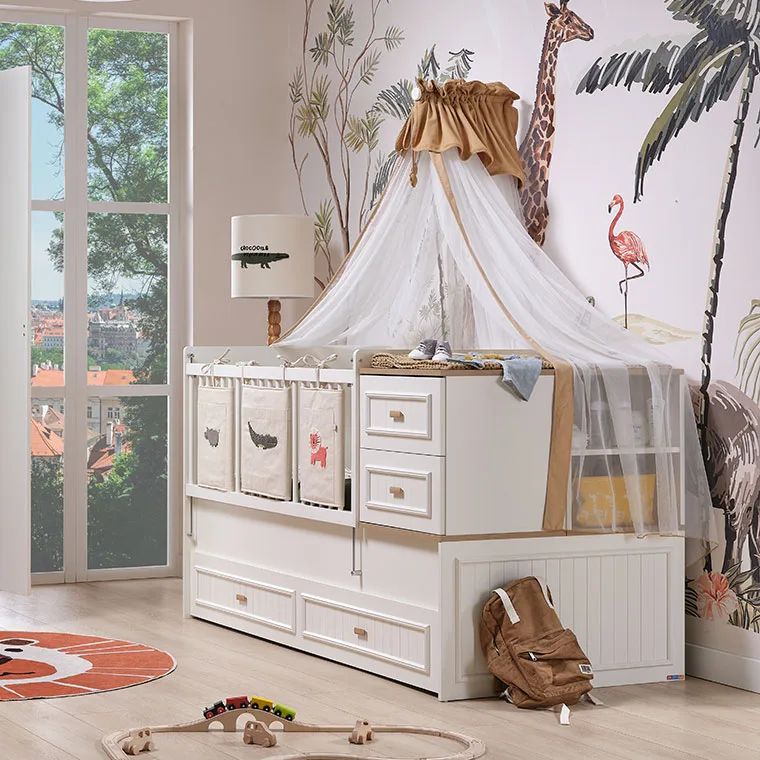
How Does a Convertible Crib Turn into a Study Desk?
Convertible cribs are modular pieces of furniture designed to suit children’s development and can also be used as study desks. Their adjustable height makes it possible to create a suitable workspace as your child grows.
Some models come with add-on shelves or drawers, keeping books and school supplies neatly stored. Their attractive designs blend seamlessly with the room, whether they are used as a sleeping or study area.
Convertible cribs offer an economical solution for long-term use: they start out as a crib and can later be used as a study desk.
- Remove the Parts: First, carefully remove the crib’s side panels and base. These parts are usually secured with screws, so use an appropriate screwdriver to take them apart.
- Adjust the Height: Use the crib’s height adjustment mechanism to set the desk height to suit your child. This is important to ensure your child can work comfortably.
- Add Any Extra Accessories: If the crib has add-on shelves or drawers, assemble them. These additions make the workspace more functional and keep books and school supplies neatly stored.
Organize: Arrange the workspace with books, notebooks, pens and other materials. Keeping only the essentials on the desk helps improve focus.
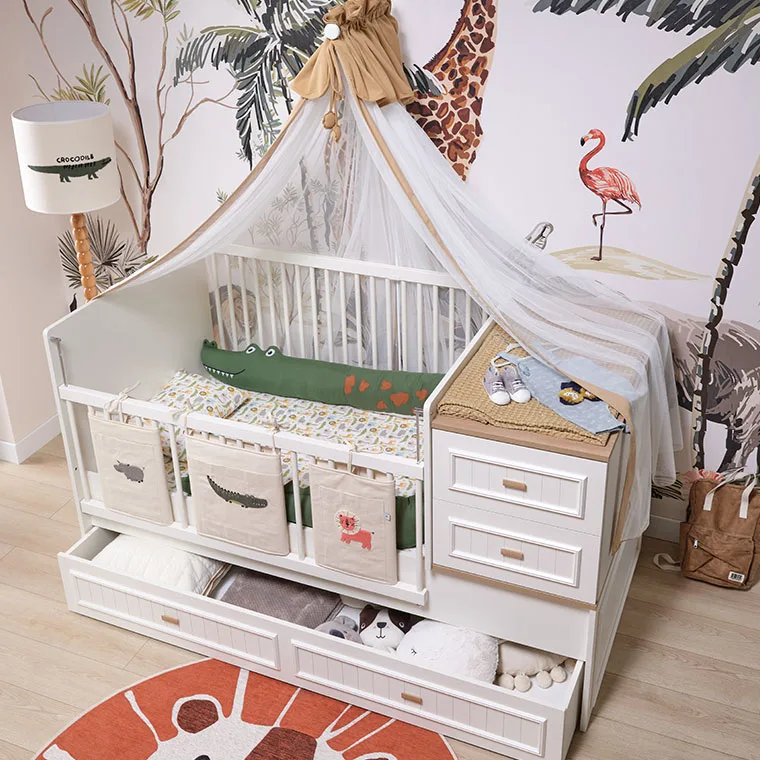
Convertible Crib Dimensions
Convertible cribs are made in a range of sizes and feature adjustable settings to suit different stages of a baby’s development. Choosing the right size is essential for your baby’s comfort and safety.
- Standard Sizes
The most common convertible crib sizes generally match standard baby mattress dimensions, such as 60x120 cm or 70x140 cm. These sizes allow your baby to sleep comfortably when first using the crib.
- Length Options
Some models can extend to a bed length of up to 150 cm. This is ideal for giving your baby more space and comfort as they grow. For example, a 70x130 cm crib can expand to 70x180 cm when converted into a child’s bed.
- Height Adjustments
The height of convertible cribs is usually adjustable. The appropriate setting depends on your baby’s age and mobility. Height adjustments should be made carefully to ensure your baby’s safety.
- Width and Depth
Convertible cribs are generally around 70 cm wide, with depths ranging from 130 cm to 180 cm. These dimensions allow your baby to move and sleep comfortably
- Convertible Crib Sizes in Different Models
Dimensions may vary between brands and models. For example, our Monte and Mia convertible crib models are 186 cm wide and 94 cm deep, with a height of 106 cm.
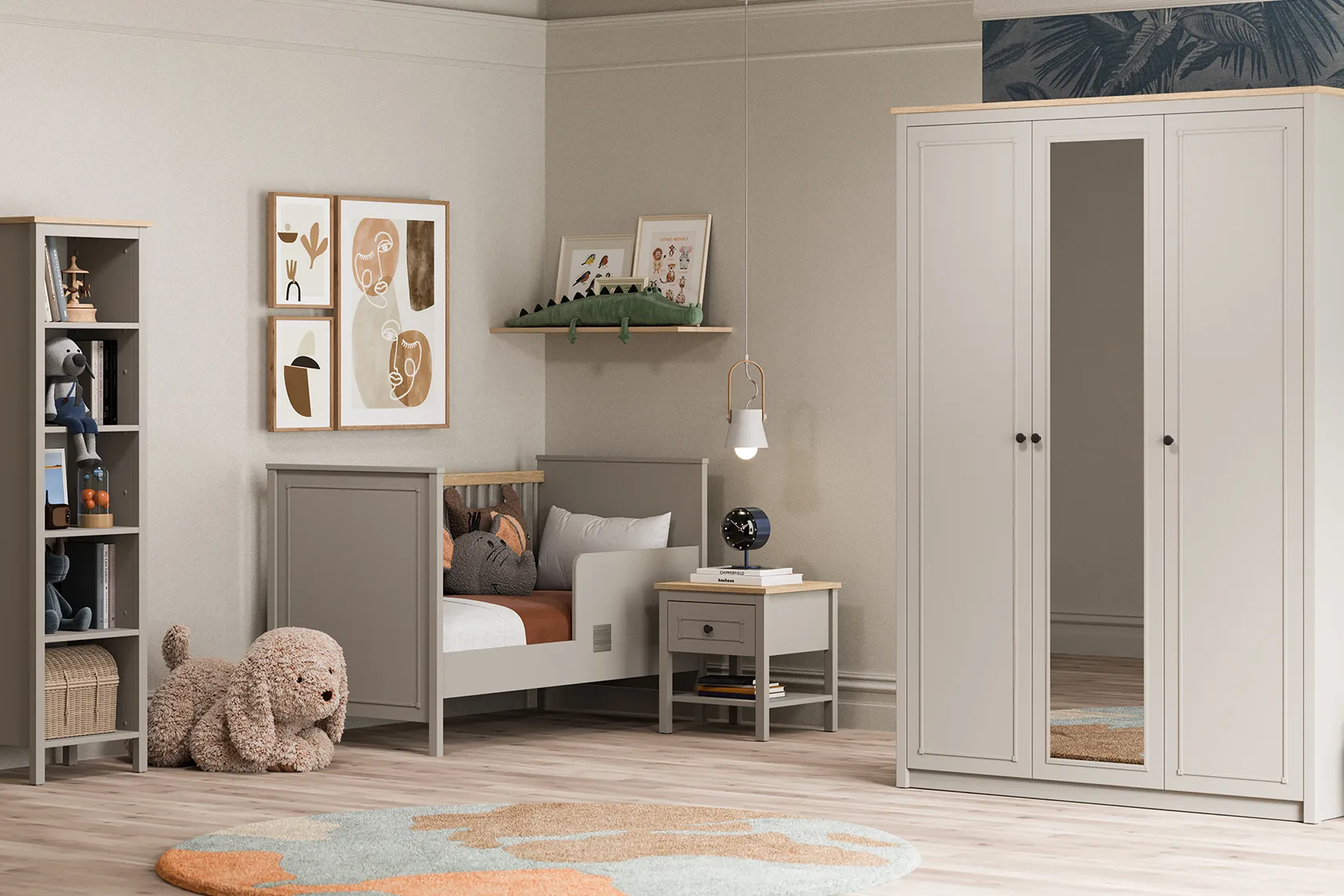
How Should You Care for a Convertible Crib?
Proper care of a convertible crib is essential for your baby’s health and the crib’s longevity. Regular care and cleaning help ensure that the crib continues to provide a safe sleeping space.
- Regular cleaning is important for keeping a convertible crib hygienic. Fabric parts should be removable and washable. Wiping metal or plastic parts with a damp cloth is sufficient. Using non-toxic cleaning products is important for your baby’s health.
- Check the mattress and pillow. It is important for the mattress to be breathable. Check the mattress material regularly and replace it when needed. Make sure pillows and blankets are clean and safe, too.
- Check the crib’s connection points regularly. If anything is loose or damaged, repair it immediately. Check the mattress platform height settings to ensure your baby can sleep safely as they grow.
- Keep the crib in a well-ventilated place and protect it from moisture. This extends the life of the materials and helps maintain a hygienic environment.
- Each convertible crib model may have its own care instructions. Read the user manual for your crib carefully and follow the manufacturer’s recommendations.
Knowing how to convert and care for a convertible crib, and choosing the right dimensions, all contribute to your baby’s healthy growth. With regular cleaning and care, you can extend the life of the crib and help your baby rest comfortably in a safe sleeping space. Remember, the right choices and care practices play an important role in your child’s healthy development. Convertible cribs are more than just a place to sleep—they’re a trusted companion by your side throughout your baby’s growing journey.
You May Also Like→ How Should a Baby’s Room Be? Essentials for a Baby’s Room